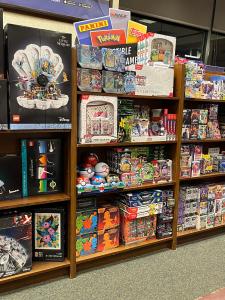
If you have tried buying Pokémon cards recently, you already know how chaotic it can be. Products sell out in seconds, resale prices climb fast, and shelves often look completely bare. For collectors and casual buyers alike, getting Pokémon at MSRP now feels almost impossible.
The good news is that it is still possible to buy Pokémon at retail price if you know where to look, how restocks actually work, and how resellers operate behind the scenes. This guide breaks down how people are still securing packs, ETBs and sealed products at MSRP through online retailers, in-store drops, warehouse clubs like Costco and Sam’s Club, cook groups and smart timing.
Why Buying Pokémon at MSRP is so Difficult Right Now
Pokémon demand is still being driven by three main groups: nostalgia buyers, new collectors, and full-time resellers. Every major release creates instant competition between all three. When a popular set launches, it often sells out before most casual buyers even realise it restocked.
Retailers also stock Pokémon very differently compared to other trading cards. Instead of predictable weekly restocks, Pokémon inventory tends to arrive in random bulk shipments, often controlled by distributors. That means timing matters more than almost anything else, and it can vary a lot from retailer to retailer.
On top of that, social media and cook groups have made it easier than ever for resellers to detect restocks before the general public. If you are not getting those same alerts, you are usually reacting too late.
Warehouse retailers like Costco and Sam’s Club still offer some of the best MSRP opportunities if you know when inventory actually arrives. We have separate, in-depth guides on when Costco and Sam’s Club restock Pokémon if you want the details.
What MSRP Actually Means for Pokémon Cards
MSRP stands for Manufacturer Suggested Retail Price. For Pokémon, this is the baseline price set by The Pokémon Company for each product type. While exact numbers vary by set and year, typical MSRP pricing usually looks like this:
| Product Type | Typical MSRP | Typical Resale Price | Notes |
|---|---|---|---|
| Booster Pack | $4.49 | $5 to $8 | Resale spikes during high-hype sets or early releases. |
| Booster Bundle (6 Packs) | $26.94 | $32 to $50 | Popular for playable formats; sells out slower than ETBs. |
| Elite Trainer Box (Standard Set) | $49.99 | $65 to $90 | ETBs remain the most scalped item due to collector demand. |
| Pokémon Center Exclusive ETB | $59.99 | $90 to $150 | Resale depends heavily on print run; PC exclusives usually rise fast. |
| Booster Box | $161.64 | $250 to $450 | Resale tends to climb gradually after release and can peak months later, which makes these a popular hold. Watch out for reprints and restocks. |
| Special Tins (Costco/Sam’s Club Bundles) | $29.99 to $39.99 | $50 to $80 | Warehouse bundles often carry the best value-per-pack. |
Retailers like Target, Walmart, Costco, and Sam’s Club are supposed to sell at or near MSRP. Third-party sellers on platforms like eBay and Amazon Marketplace usually inflate prices based on demand.
For collectors, MSRP buying is important for three reasons. It keeps your cost per card low, protects you from hype spikes, and allows sealed collectors to hold for long-term value without overpaying at entry.
How Cook Groups Help People Buy Pokémon at MSRP
Cook groups are private communities that track product drops, restocks, and retailer inventory in real time. While many people associate cook groups with sneakers, they now heavily track Pokémon as well.
A good cook group will alert members when:
- Costco receives Pokémon bundles
- Sam’s Club adds online inventory
- Target performs early morning restocks
- Walmart warehouse stock updates
These alerts allow buyers to attempt checkout within minutes instead of hours. That time difference is often the difference between paying MSRP and paying resale.
Cook groups aren’t magic. Even with alerts, competition is still intense. What they do give you is information at the exact moment inventory becomes available, which is what most buyers lack.
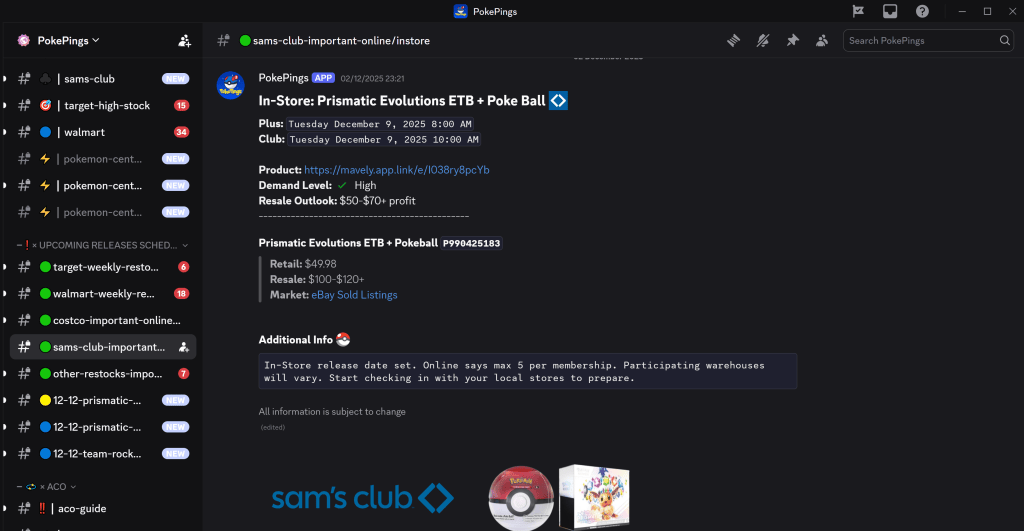
The screenshot above is from PokePings, our own Pokémon cook group, and shows how restock alerts are laid out for members.
Buying Pokémon at MSRP from Costco
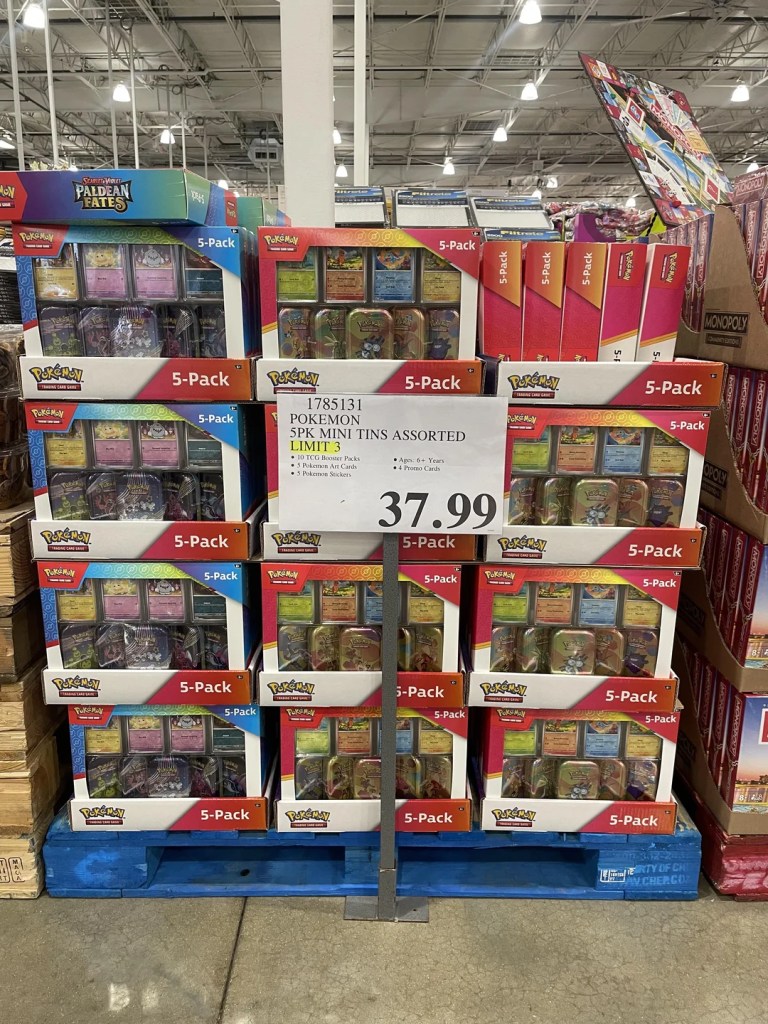
Costco is one of the best places to buy Pokémon at retail price. They do not sell loose packs in most cases. Instead, they focus on exclusive bulk bundles that cannot be found elsewhere at the same price.
These bundles may include:
- Elite Trainer Boxes bundled with promo packs
- Collection boxes packaged with tins
- Special seasonal multi-pack sets
Costco restocks behave differently from normal retail. Inventory usually drops in large waves every few months, not weekly. Online stock sells out fast, while in-store stock can linger briefly depending on your location.
The catch is that you must have a Costco membership to purchase. However, the value per dollar is often better than anywhere else when bundles are available.
Buying Pokémon at MSRP from Sam’s Club
Sam’s Club works in a very similar way to Costco but often restocks at different times. Some buyers have better luck at Sam’s Club because fewer collectors monitor it compared to Target and Walmart.
Sam’s Club usually focuses on:
Seasonal Pokémon collector chests
Multi-pack bundles
Holiday-exclusive box sets
Online inventory tends to disappear quickly during major releases, but in-store stock can be easier to secure if you are willing to check early morning or midday after vendor drops.
Sam’s Club also requires a membership, but many serious collectors keep both warehouse store memberships specifically for Pokémon access.
Target, Walmart, and the Myth of Consistent Restocks
Target and Walmart still technically sell Pokémon at MSRP, but their restock systems are unpredictable. Some locations stock once per week. Others receive inventory once per month. Some stores restock at opening, others mid-day.
Online drops are worse. Products may appear in stock for seconds and then vanish due to bot purchases, cart hold timeouts, or inventory sync issues.
This is where cook groups, Twitter alerts, and Discord pings become most valuable. Without alerts, most people miss these drops entirely.
How Resellers Buy Pokemon at MSRP
This part matters because it explains why inventory disappears so fast. Most full-time resellers do the following:
- They run multiple location-based alerts
- They shop warehouse stores in bulk
- They arrive at opening on vendor restock days
- They cycle inventory across multiple platforms
Resellers are not usually clearing shelves blindly. They are targeting specific SKUs known to have resale margins. ETBs, premium collections, and specialty tins are the main focus. Basic blister packs often sit longer because margins are thinner.
Understanding reseller behaviour helps you avoid competing at the wrong moments. If you chase the same SKU everyone else wants, your odds drop immediately.
The Best Times of Year to Find Pokémon at MSRP
Timing matters more than most people realise. Pokémon restocks follow seasonal patterns tied to major releases and holidays.
- January through March is often slower after holiday sell-through
- Spring brings new set waves and increased retail shipments
- Back-to-school season usually sees multi-pack restocks
- Holiday Q4 has the most inventory but also the most buyers
Warehouse stores like Costco and Sam’s Club usually release their best bundles during Q4. If your goal is sealed collecting at MSRP, that is the most important season to plan for.
Should You Join a Cook Group Just for Pokémon?
If you are serious about consistently buying Pokémon at MSRP, a cook group is usually worth it. Even a basic group can pay for itself with one successful MSRP checkout on a high-demand item.
That said, not all cook groups track Pokémon well. Many focus mainly on sneakers and consoles. If you are joining for Pokémon specifically, you want one that tracks:
- Target backend changes
- Warehouse inventory
- Online SKU preload leaks
- Discord alert automation
If your group does not track those, it will not give you much advantage.
MSRP vs Resale: Is It Still Worth the Chase?
For some buyers, the stress of hunting at MSRP is not worth it anymore. Resale prices fluctuate heavily based on hype cycles. Some sets spike immediately and crash later. Others climb slowly over time.
If you are ripping packs for fun, paying resale long-term becomes expensive. If you are sealing products for investment, overpaying upfront reduces your margin.
For most collectors, MSRP buying still offers the best value and the best experience. You get the excitement of the hunt without immediately losing money on purchase.
Smart Strategies to Increase Your MSRP Success Rate
Consistency wins here more than luck. People who succeed repeatedly usually do these things quietly and patiently:
- They check warehouse stores monthly
- They monitor morning restocks
- They use alerts but do not rely on just one source
- They buy less hyped products to build inventory gradually
You do not need to beat bots to succeed. You just need to avoid chasing the same high-hype product as every reseller on the internet.
Related reading: our guide on how to buy cheap Pokémon cards.
Final Thoughts: Is It Still Possible to Get Pokémon at MSRP?
Yes, but it requires more strategy than it did a few years ago.
Costco and Sam’s Club remain two of the best low-competition opportunities for sealed Pokémon at retail price. Cook groups give you access to the same fast-moving information that resellers use. Understanding restock behaviour and seasonal waves helps you plan instead of panic.
If you treat Pokémon buying like a routine instead of a race, MSRP becomes realistic again.
Still struggling to find Pokémon at MSRP? Our PokePings review explains how a Pokémon-focused alert group can help you catch restocks in time.